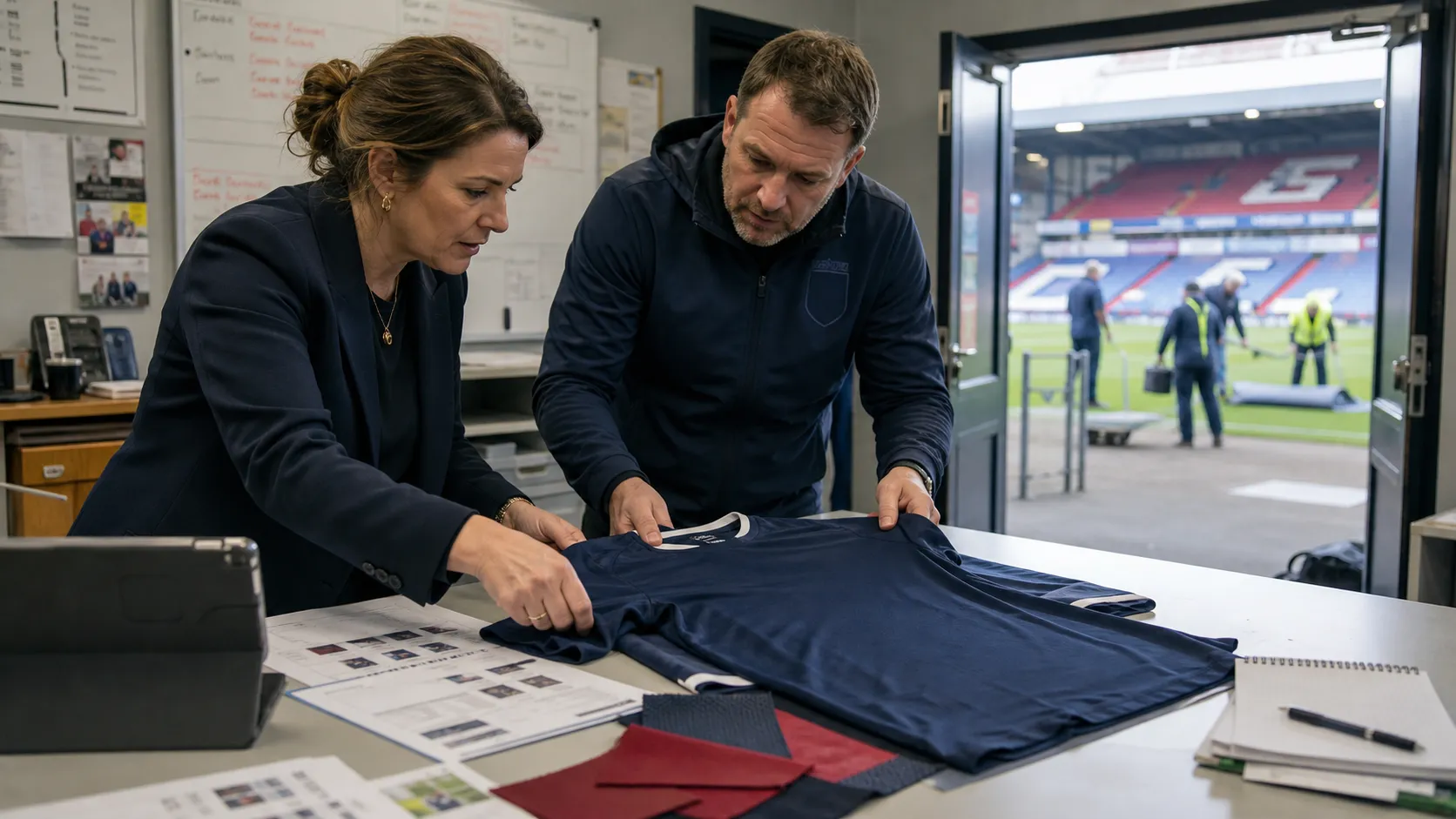
From the 2026/27 season, gambling companies can no longer appear on the front of Premier League shirts. The headline number is that this removes around £80 million a year from the game. But the headline number is the least interesting thing about this.
What actually matters is which clubs lose the money, what has to replace it, and whether our industry has the infrastructure to handle the replacement. Because the answer to that last question, for most clubs, is no.
01Who actually loses
The instinct is to assume the biggest clubs take the biggest hit. They don't. The Big Six were never especially reliant on gambling sponsors. The clubs that relied on betting money were the ones in the middle and at the bottom - because it paid better than anything else available, often close to double what an equivalent non-gambling sponsor would offer for the same real estate.
A betting company would pay £8m for a shirt where a regional business would pay £4m, and when you're a club fighting to stay in a division, you take the £8m. So the ban doesn't just remove revenue. It removes the highest-paying category from the clubs with the least margin to absorb it.
02The maths nobody talks about
If you lose one sponsor worth £5 million, you do not replace them with one sponsor worth £5 million. That sponsor does not exist for most clubs, and if they did, they'd already be sponsoring you. You replace them with ten sponsors worth £500,000. Or twenty worth £250,000. Or, further down the pyramid, forty local businesses worth £12,500 each.
And selling ten sponsors is not ten times the work of selling one. It's more like thirty times. Because every additional sponsor needs:
Finding. Someone has to identify them, qualify them, and get in front of the right person.
Pricing. What is this asset actually worth to this business, and how do you justify it?
Negotiating and contracting. Ten separate conversations, ten sets of terms, ten agreements.
Invoicing and chasing. Ten payment schedules, and, if experience is any guide, several that need chasing.
Servicing and reporting. Ten relationships that expect to hear from you, and ten sponsors who want to know what they got.
Renewing. Ten conversations, every single year, forever.
One large sponsor is a relationship. Twenty smaller sponsors is an operation. Most clubs have been asked to run an operation using tools built for a relationship.
03What that looks like on the ground
I've spent six years having this conversation with clubs at every level, and the pattern is remarkably consistent. Commercial inventory lives in a spreadsheet, maintained meticulously by a single person - a version of the truth that cannot be shared, collaborated on, or defended in a board meeting. Enquiries arrive across email, WhatsApp, LinkedIn, the club shop counter and occasionally a conversation in a car park. Deal history sits with a person rather than the club. Payment status lives in the treasurer's head.
None of this is a criticism of the people involved. I've never met a club that doesn't care about its sponsors. I've met a great many clubs that don't have the hours, the systems or the headcount to do it the way they'd want to. Now add twenty sponsors to that, at speed, because a regulatory change just removed your anchor deal.
04The evidence this is already happening
A month before the start of the 2026/27 season, seventeen of twenty Premier League clubs had confirmed a shirt sponsor. Chelsea, Nottingham Forest and Sunderland had not. Three clubs, at the very top of the English game, with full commercial departments and retained agencies, still without a front-of-shirt partner weeks before kick-off.
That isn't incompetence. It's a market adjusting. If it's taking that long at the top, consider what it looks like three divisions down, where the commercial team is one person, and four divisions down, where it's a volunteer doing it after their day job.
05What good looks like
The easy version of this article ends with "and that's why you need software." That isn't the argument. The argument is that our industry is being pushed towards a different commercial model, many smaller partners rather than few large ones, and that model has different requirements. Three things matter more than they used to.
A national brand has an agency whose job is to find you. A regional business does not. Every asset should be visible, priced or clearly marked as negotiable, and reachable without an introduction - not buried in a PDF that gets emailed on request.
Twenty sponsors means the process has to survive people. Enquiries need to arrive attached to the thing they're about. Conversations need to be findable by the next person. Payment needs to be trackable by someone other than the treasurer.
A £5m sponsor has an agency measuring their return. A £15,000 local sponsor has the owner asking themselves in April whether it was worth it. If a club can't show what a sponsor got, renewal becomes a matter of goodwill - and goodwill is wonderful until the business has a bad quarter.
06Where this leaves our industry
Regulation forced this change, but it was coming anyway. Any commercial director who's had a single sponsor account for a third of their revenue has lain awake about it. What the ban has done is compress the timeline. Clubs that expected to diversify over five years are being asked to do it in one.
Every club in this country has local businesses in its stands, its car park and its WhatsApp groups who would sponsor tomorrow if somebody made it obvious how. Multiply that by every club in the pyramid and the £80m hole starts to look less like a crisis and more like a redistribution, from a handful of betting companies to thousands of local businesses who've been waiting to be asked.
That's uncomfortable. It's also the single biggest commercial opportunity in the English game right now. They just need the rails to do it on.
Sponsorfy is the commercial and payments infrastructure for football clubs. Clubs list every sponsorship asset they have, local and national businesses find and pay for it directly, and the club keeps the relationship. Free for clubs, from the Premier League to grassroots.
- Premier League front-of-shirt gambling sponsorship ban, effective 2026/27 season; estimated £80m annual revenue impact
- 17 of 20 Premier League clubs confirmed shirt sponsors one month before the 2026/27 season
- 11 of 24 Championship clubs carried betting front-of-shirt sponsors in 2022/23
- Deloitte Annual Review of Football Finance: Championship commercial revenue £303m in 2023/24 (+52%); League One average club revenue £9.1m (−7%)

Mark is the founder and CEO of Sponsorfy. He spent seven years at Auto Trader, reaching sales director, and has spent the last six years working with clubs from the Premier League to grassroots on the infrastructure behind football sponsorship.