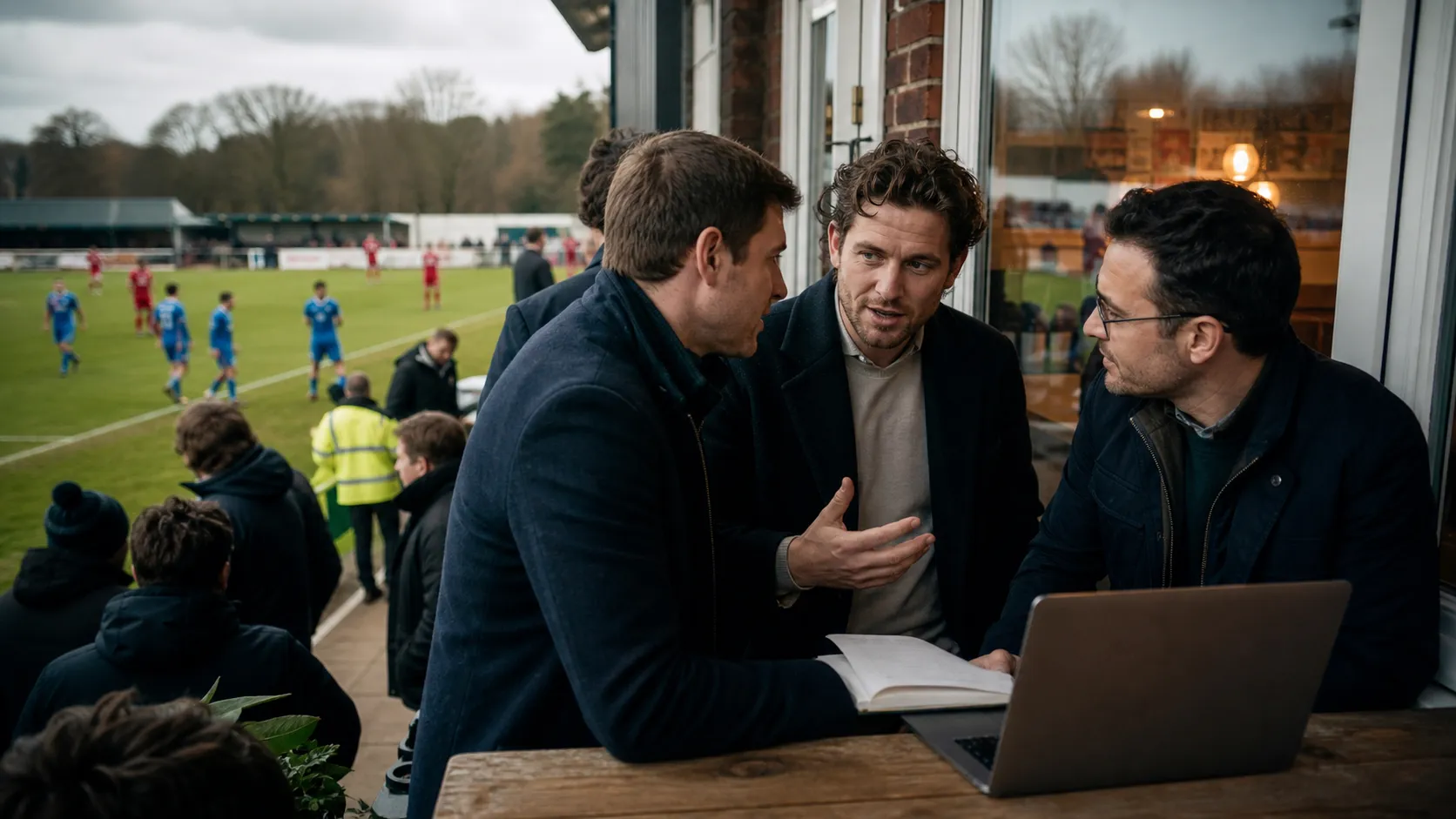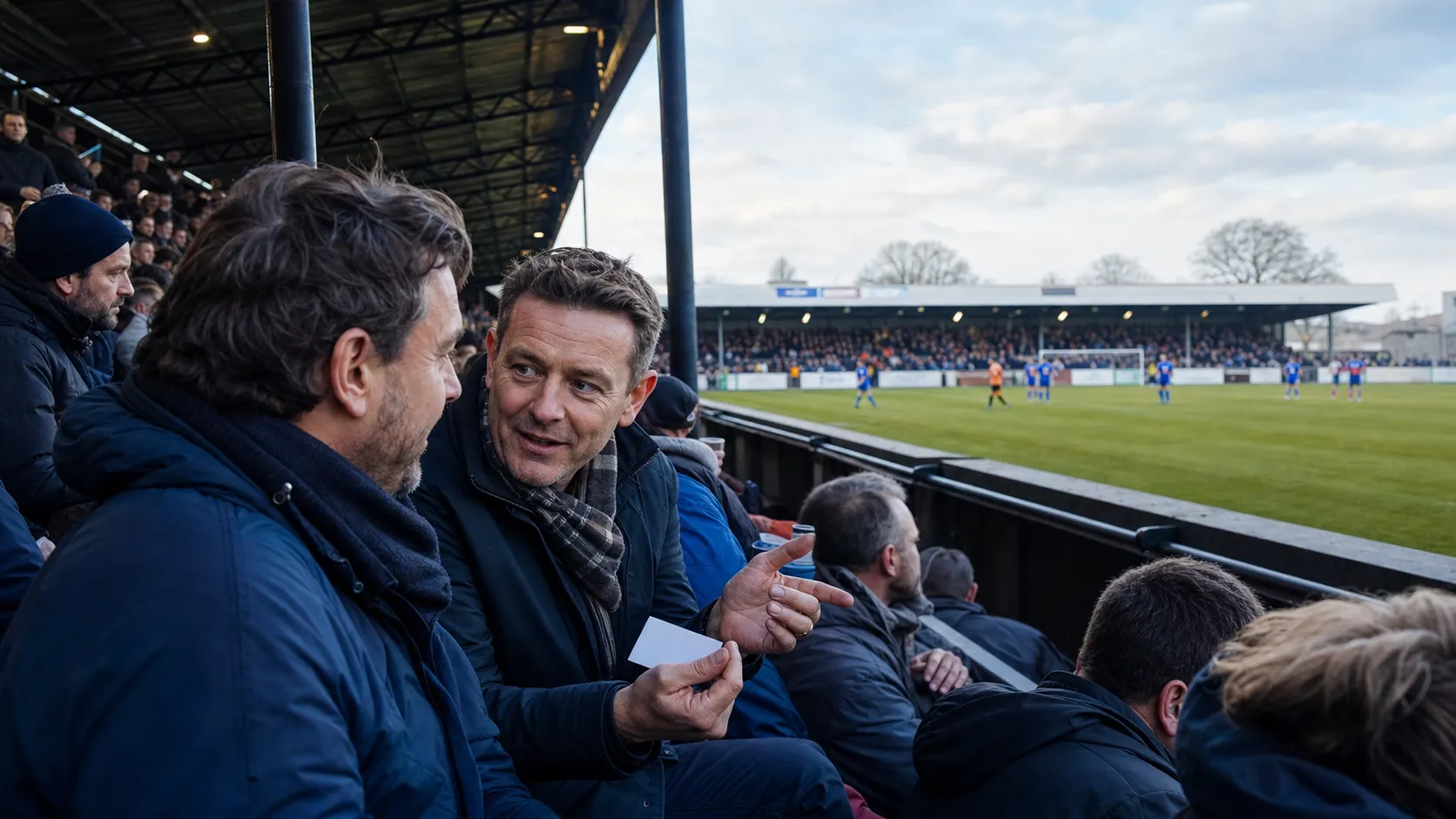
A friend of mine has held a Brentford season ticket for years. He's there every other week. He knows the songs, he knows the stewards, he's got opinions about the left-back. He also runs a business.
He asked me recently - genuinely asked, not rhetorically - how he'd go about getting his logo onto an advertising board inside the ground. He didn't know. After years of going, he had no idea who to speak to, what it might cost, or whether it was even possible for a business his size. Here is a man who loves the club, attends regularly, has money to spend and wants to give the club that money - and the transaction didn't happen. Not because of price. Not because of doubt. Because there was no route.
01The strangest thing about football sponsorship
Clubs spend enormous effort trying to find new sponsors. Commercial managers cold-call. They post on LinkedIn. They ask agencies for introductions. Meanwhile, two or three thousand people walk through the turnstiles every other Saturday. A meaningful percentage of them own or run businesses. Almost all of them have an emotional attachment to the club that no cold prospect will ever have.
The warmest commercial audience any football club will ever have is the one that already pays to watch it. And it is, almost universally, the least worked.
Not because clubs are careless. Because there has never been a mechanism. You cannot cold-call three thousand people. You cannot manually qualify a stand. So clubs have gone looking outwards, past the exact audience most likely to say yes.
02Why the fan is the best sponsor a club can have
They already know the value. A cold prospect needs convincing that sponsoring a National League club is a sensible use of £2,000. A supporter knows the crowd, the reach, the community standing. Half the sales conversation is already done.
They convert faster. A local business owner who supports the club can decide in a week. A regional firm with no connection will take three months and a procurement process for the same money.
They renew. Churn is the quiet killer in club sponsorship. A supporter-sponsor is far stickier, because the relationship exists independently of the deal. They'll be in the ground on Saturday regardless.
They advocate. A supporter who becomes a sponsor tells other local business owners, in the bar, at the game. That's a referral channel no agency can replicate.
And they're already paid for. Every ticket sold, every social follower earned, every matchday delivered. The acquisition cost is zero because acquisition already happened.
03What's actually stopping it
A typical club has fifteen to thirty sellable assets - boards, hospitality, match balls, player sponsorship, programme adverts, dugouts, stand naming. Almost none of it is visible outside the club. If a supporter doesn't know player sponsorship costs £500, they cannot buy player sponsorship for £500.
Try it: go to your own club's website and work out, in under two minutes, exactly who to contact about sponsorship. Matt Jarvis, who played over a decade at the top level, makes this point better than I can - even for someone inside the game, it's genuinely hard. Consider the bloke with the plumbing business in row H.
Interest peaks during the match - standing in the ground, looking at a blank perimeter board, thinking "I could put my company there." By Monday morning, that thought is gone. The distance between peak intent and possible action is measured in days. It should be measured in seconds.
04What it looks like when you close the gap
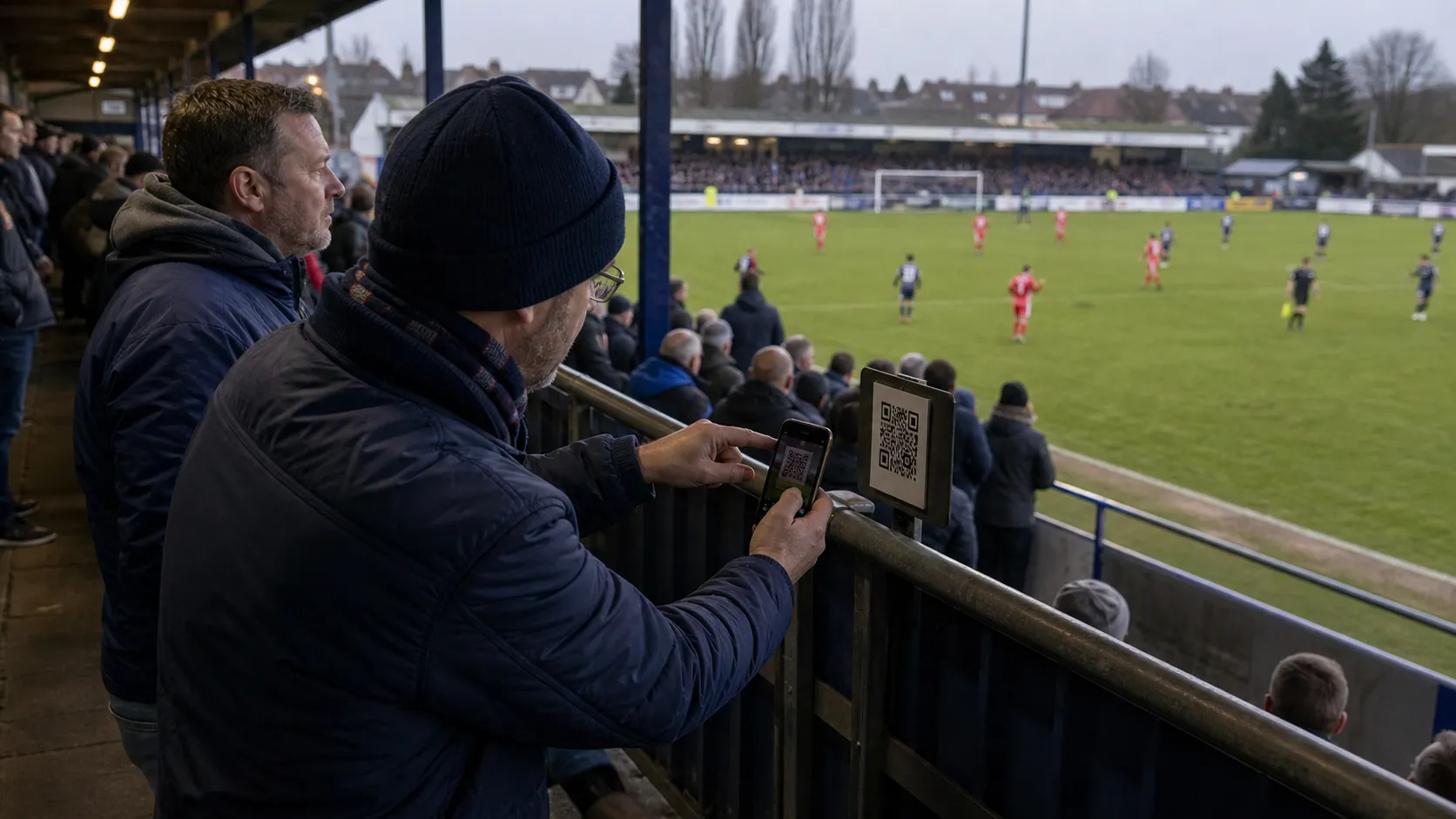
About a year ago I built a prototype. One semi-professional club used it - QR codes around the ground, some links on their socials. Just over two thousand pounds of new sponsorship in four weeks. No sales team. No advertising budget. No campaign. They took inventory they already had, made it visible where their supporters already were, and gave people a way to act.
They didn't create demand. They removed friction from demand that was already standing in the ground. That's the whole thesis in one example. And it was a prototype at a semi-pro club. Scale that thinking across a National League ground, an EFL stadium, a Premier League crowd of sixty thousand.
05The mechanics that matter
Put a QR code where the asset is. Not on a leaflet. On or next to the thing being sold. A blank board with a small code saying "sponsor this board" converts because the person is looking directly at what they'd be buying.
Show the price. For everything under roughly ten to fifteen thousand pounds, published pricing removes the biggest single barrier - the fear of looking foolish by asking about something you can't afford. Most people won't send that email. They will click a price.
Let them buy without a meeting. A £450 programme advert should not require a phone call, a proposal and an invoice raised three weeks later. The admin cost of that process frequently exceeds the value of the deal.
Keep the bigger conversations human. A principal partnership should absolutely involve a meeting and a walk round the ground. The point is to stop applying that process to a £450 advert, so the commercial team has time to do it properly for the deals that deserve it.
The most common objection is that supporters won't want to be sold to. I think it has it backwards. Supporters aren't being sold to. They're being given access to something they already want and currently can't get. My friend at Brentford wasn't resisting a sales pitch. He was actively looking for one and couldn't find it.
The second objection is that local business money is small money. It's smaller per deal. It is not smaller in aggregate, and it is considerably more resilient. Forty local sponsors at £1,500 is £60,000, and losing one of them costs you £1,500. One sponsor at £60,000 is a single point of failure that keeps the commercial director awake.
06The bit that isn't about money
When a local business sponsors a football club, something happens that doesn't happen with a national brand. The owner brings their kids to a game. Their staff start going. The club becomes part of how that business sees itself in its town. That's what football clubs are for. It's the whole reason they matter more than their revenue suggests they should.
There is someone in your ground this Saturday who would sponsor your club if you made it obvious how. Make it obvious.
Sponsorfy is the commercial and payments infrastructure for football clubs. Every asset listed, priced and shareable with its own link and QR code, so the sponsor in your stand can act in the moment. Free for clubs, from the Premier League to grassroots.

Mark is the founder and CEO of Sponsorfy. He spent seven years at Auto Trader, reaching sales director, and has spent the last six years working with clubs from the Premier League to grassroots on the infrastructure behind football sponsorship.